





Teaching the M Sound

January 24th, 2009

I have had a lot of interest in how to teach the remaining sounds I have yet to blog about so I’ve decided to start with the /m/ sound, and we’ll go from there.

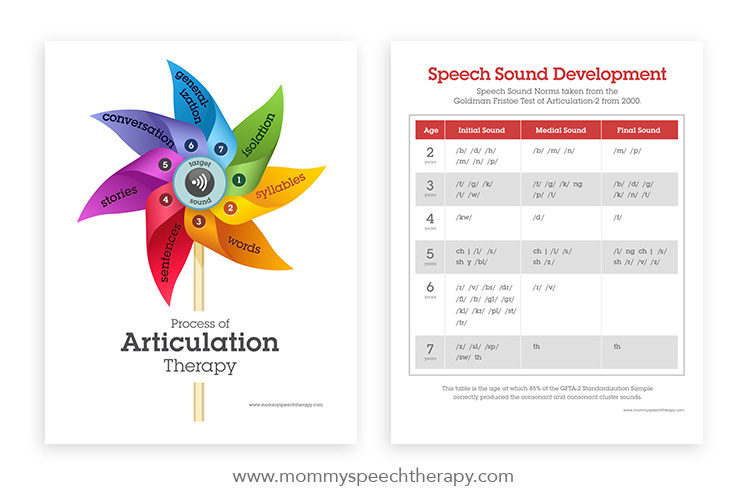
“Mmmmmmmm,” the /m/ sound.  A fun sound to teach, because even if your child isn’t using it correctly in all positions of words he/she most likely uses or has played around with this sound.  ”Ma-ma-ma-ma,” is usually one of the first sounds we hear our little kiddos babble because the /m/ sound is made by bringing the lips together which is one of the first motor skills our little ones learn.  If however, you feel you need to start from the very beginning I will walk you through the steps.  Here we go…

How to Elicit the /m/ Sound:

1. Model the sound yourself and encourage your little one to imitate you.

2. Put your child’s hand on your mouth while you are making the sound so they can feel the vibrations, then put their hand on their own mouth and encourage them to try to make the sound.

3. Have them watch themselves in the mirror to make sure they are bringing both lips together.

4. If they have difficulty bringing their lips together because of low muscle tone it is time for some lip exercises.  If this is the case let me know and I’ll give further suggestions.

Practice the /m/ Sound in Syllables:

Put the /m/ sound in front of all the long and short vowels, may, me, my, mow and moo.  Then practice the /m/ sound at the end of the vowels, um, am, im, om, em and finally in the middle of the vowels, imo, aymu, ema, omee … you get the idea.

If your child can successfully say the /m/ at the beginning of syllables then they are ready to practice the sound at the beginning of words.

Practice the /m/ Sound in Words:

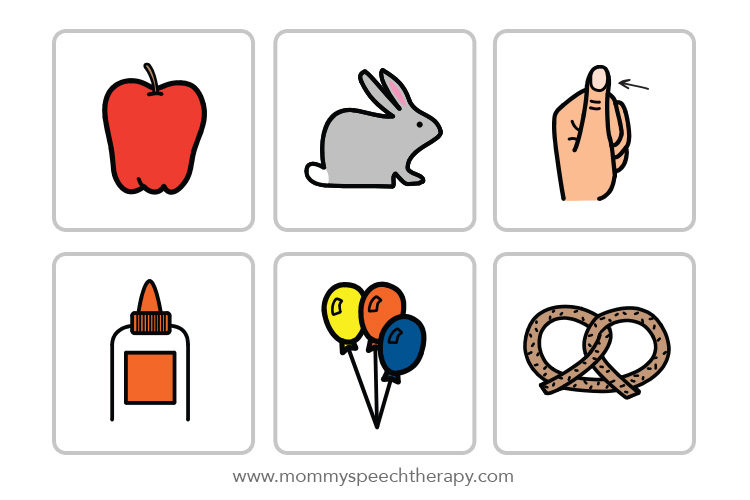
If your child can say the syllables above with a nice /m/ sound then he is ready to move them into words. Below are 3 links to download picture cards of words beginning with the /m/ sound, ending with the /m/ sound or with /m/ occuring in the middle. You can also download these and other sound cards on the downloads page.

Here are 3 sets of word cards to help teach the /m/ sound:
1. m-initial words.pdf

2. m-medial words.pdf

3. m-final words.pdf

Move the /m/ Sound Into Sentences

If your child can say the /m/ sound in the beginning of words then practice the initial /m/sound in sentences. For example “Mail me a  _________.” Fill in the blank with the initial /m/ words you have been practicing, “Mail me a moose, or Mail me a mermaid…”

If your child can say the /m/ sound at the end of words then practice the the final /m/ sound in sentences. For example, “_________ come home.” Again filling in the blank with the final /m/ words you practiced.

If your child can say the /m/ sound well in the middle of words then practice the medial /m/ in sentences. For example, “Sammy has a  __________.”

Move the /m/ Sound into Stories

Create short stories with the picture cards you have been practicing.  Have your child practice retelling them.  For example, “The mummy went to the mountains and ate marshmallows and macaroni.  Then he met a mermaid and shared milk and muffins…”  Be creative with this, the most important thing is to create an opportunity for your child to get as much practice with the sounds as possible.

Move the /m/ Sound into Conversation

If your child is successful with the /m/ sound while retelling the stories you have created he is ready to move the /m/ sound into conversation. It is at this point you can correct your child if he forgets to pronounce the /m/ correctly in conversation.

I hope these suggestions help.  Remember, the more opportunities for practicing the sounds the quicker you will see change.  But be patient, no one performs well under stress, especially not our little ones!

The Newest Addition!

June 6th, 2008

I wanted to write a quick note to let all of you know that my husband and I were blessed with a little baby boy 2 months ago. Having a newborn and a 2 year old in potty training has been a lot of work, I’ve never felt more like a mom than I do now! Exhausting! I know there are moms out there doing twice as much as me…I should be getting advice from them! I haven’t been on the blog for awhile to give my family as much time as possible. Thank you for being so patient and I’ll see you soon. Oh, we named him Sawyer and of course I’ll add a picture of him for you all to see!

-Heidi

sawyer_02.jpg

How to teach the T and D Sounds

March 20th, 2008

T & D Sounds

I recently had a client that was struggling with the /t/ and /d/ sounds and realized I have not yet covered these on Mommy Speech Therapy, so I thought I’d share some thoughts on how to teach these sounds. I have grouped these sounds together because they are produced in the same manner and place. The only difference between the /t/ and /d/ sounds is the /d/ sound is voiced while the /t/ sound is not. If your child can produce a /t/ sound and not the /d/ sound you simply teach them to “turn on their voice” for the /d/ sound. Or if it is the other way around you teach them to “turn off their voice” by whispering the sound for the /t/.

Can Your Child Lift their Tongue Tip?

The most common substitution by children for the /t/ and /d/ sounds are /k/ and /g/ sounds. Children substituting the /k/ and /g/ sounds for /t/, /d/ and other front sounds generally do so because they have difficulty raising their tongue tip or they are confused about where to place their tongue to produce a /t/ and /d/ correctly. A simple way to test this is to have the child move their tongue from side to side and then up and down.

Teach Your Child Where to Place the Tongue for /t/ and /d/

If elevating the tongue tip is no problem then it is just a matter of placement. Try stimulating the gums behind the front teeth (the alveolar ridge), and the tongue tip with a small toothbrush, then tell the child to place the tongue tip behind his front teeth. Once the tongue is in place have him try to imitate a /t/ or /d/ sound all by itself. This should produce the sounds.

Teach Your Child How to Raise the Tongue for /t/ and /d/

If raising the tongue tip is difficult I like to use something tasty to provide a little incentive to get that tongue tip up. That something tasty might be putting peanut butter, pudding or marshmellow cream on the alveolar ridge, which is right behind the front teeth. Then have the child raise the tongue tip to lick the food off. Once the tongue tip is in place have them try to say the /t/ or /d/ sounds. You might say, “Make the sound of a clock, t-t-t-t-t-t.” This has been a very successful technique in therapy with the kids I work with.

Strengthen Tongue Tip Elevation for /t/ and /d/

Another good way to exercise that tongue tip elevation is to have the child hold a cheerio, or smartie on the alveolar ridge with his/her tongue tip. Play a game where they hold it up while you count to 10 then they can eat it. This typically works well with children who are 4yrs. of age and older.

Move the /t/ and /d/ Sounds Into Syllables

Once your child can produce a good /t/ or /d/ sound all by itself it is time to move it into syllables. For example practice saying, ta, toe, tea, tai, tay, too, tu or at, ate, eat, ite, ot or atto, etta, ittu, auto, utta

Move the /t/ and /d/ Sounds Into Words

If your child can say the syllables above with a nice /t/ or /d/ sound then he is ready to move them into words. Below are 6 links to download picture cards of words beginning with the /t/ and /d/ sounds, ending with the /t/ and /d/ sounds or with /t/ or /d/ occuring in the middle. You can download these as well as other sound cards on the downloads page.

6 sets of word cards to help teach the /t/ and /d/ sounds:
1. t-initial words.pdf
2. t-medial words.pdf
3. t-final words.pdf
4. d-initial words.pdf
5. d-medial words.pdf
6. d-final words.pdf

Move the /t/ and /d/ Sounds Into Sentences

If your child can say the /t/ or /d/ sound in the beginning of words then practice the initial /t/or /d/ sound in sentences. For example with /t/ words you might use the sentence Talk to the _________. Fill in the blank with the initial /t/ words you have been practicing, Talk to the tree, or Talk to the tiger.

If your child can say the /t/ and /d/ sounds at the end of words then practice the final /t/ or /d/ sounds in sentences. For example for the /t/ sound try, The _________ is hot. Again filling in the blank with the final /t/ words you practiced.

If your child can say the /t/ and /d/ sounds well in the middle of words then practice the medial /t/ or /d/ sounds in sentences. For example with the /t/ sound, have a beautiful __________.

Move the /t/ and /d/ Sounds into Stories

Have your child practice the /t/ and /d/ sounds while reading out loud. If your child cannot read have your child practice the /t/ and /d/ sounds while retelling short stories. I often make up stories using the picture cards we have practiced.

Move the /t/ and /d/ Sounds into Conversation

If your child is successful with the /t/ and /d/ sounds while reading aloud he is ready to move the /t/ and /d/ sounds into conversation. It is at this point you can correct your child if they forget to pronounce the /t/ and /d/ sounds spontaneously.

These suggestions should help your child move in the right direction for the production of the /t/ and /d/ sounds. Good luck with these steps, and remember to be patient. Your child will get this, it’s only a matter of time! I would love to hear your success stories with these or any other sounds you’ve been working on. I hope this post has been helpful. :)

-Heidi